
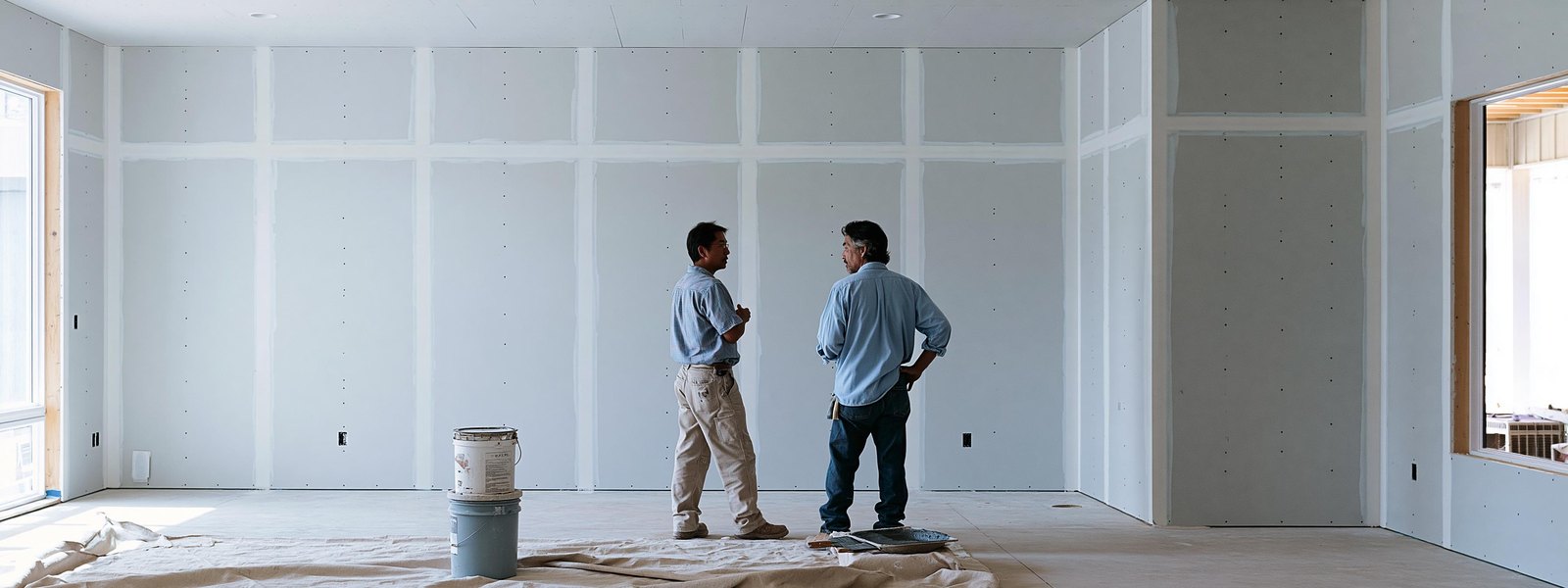
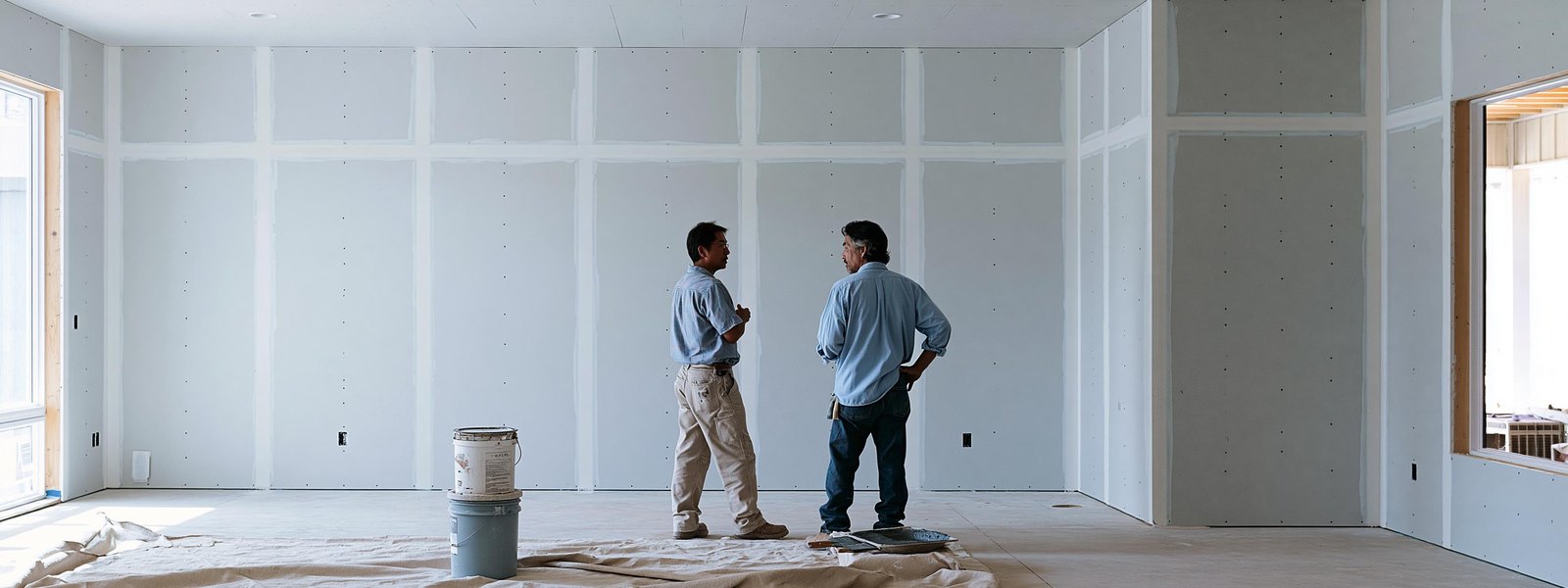
Long interior wall of pale gray drywall board with the joints taped in straight feathered bands and the board bare between them, two finishers in work shirts standing back from it in conversation, one pointing along a joint and the other following where he points

Drywall Taping and Finishing in San Antonio, TX: Level 4, Level 5 and Flat Seams

The board goes up in a morning. Making the joints disappear takes a few days, because every coat has to dry hard before the next.

Long interior wall of pale gray drywall board with the joints taped in straight feathered bands and the board bare between them, two finishers in work shirts standing back from it in conversation, one pointing along a joint and the other following where he points

Flat Wall Seams and the Drywall Finish You Choose

Your wall is only as flat as its joints. What you see from across the room is compound, spread over every seam and screw head. San Antonio Expert Drywall does that half of the work.

Nearly every wall in this city gets a sprayed finish over it, and that finish hides a lot. So drywall taping and finishing in San Antonio usually stops at a level 4, the plain smooth surface that goes under paint or texture. On most houses that's the right place to stop, and we'll say so rather than sell you the one above it.

The joints that give trouble are the ones you can't see at nine in the morning. A seam a hair proud of the wall reads flat under a lamp, then shows as a stripe once the afternoon sun crosses it.
How We Tape and Float Your Drywall Seams

Two sheets meet in a line, and that line has to end up invisible on your wall. In Texas that's called tape and float, and the floating takes the time.

The First Coat of Drywall Compound Does the Most Work

The first coat decides the ones after it. Compound goes into the joint, paper tape is pressed in, and a knife pulls the excess out from underneath. That's what a finisher means by bed the tape. Air left behind turns into a bubble, and a bubble into a line you can see, so we take our time here.

The Two Drywall Coats That Go On After the Tape

Two more coats follow, each wider and thinner than the last, until your eye can't find where the joint ends. On your walls that's all-purpose compound, the softer mud that sands easily. Where a schedule is tight we bed with hot mud instead, which sets chemically rather than drying, so the next coat goes on sooner.

Where a Drywall Seam Gives Itself Away

A long straight ridge floor to ceiling, brightest with light across it
A shallow trough beside a joint, sanded back instead of floated wider
Rows of small dimples where screw heads were filled once and left
Hairline cracking along a taped line, where the tape never bedded
Inside corners catching a shadow down one side
Outside corners with a wave you find by sighting the edge

Drywall Finish Levels 4 and 5

Finishing is sold by level, and the levels are a trade standard rather than something a company invented. Knowing which one your walls are getting is what lets you compare two prices properly.

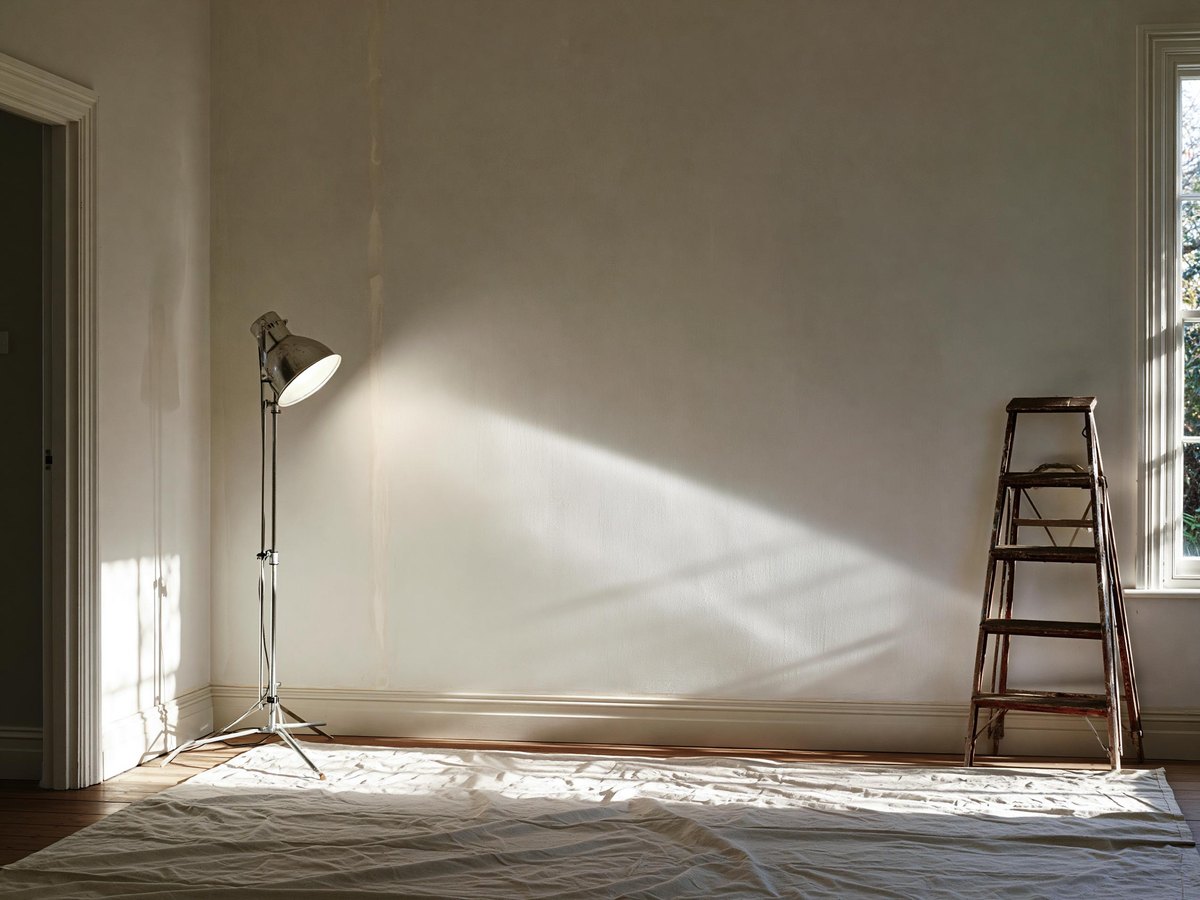
Work light on a low stand set close in to a finished wall so its beam skims across the surface, one taped joint picked out as a faint pale band running floor to ceiling, a folded step ladder against the far wall

Level 4 Is the Finish Most Walls Get

A level 4 means the tape is bedded, the joints have had their coats, the screws are filled and the lot is sanded smooth. It's what sits under a sprayed finish, and it's the standard a painted wall gets. On most houses, yours included, it's plenty.

When a Level 5 Skim Coat Is Worth It on Your Walls

A level 5 adds one more pass: a skim coat, a thin film of compound pulled across the whole surface so the joints and the board wear one skin. It earns its money on walls you're painting flat, and on a long hallway with a window at the end. Anywhere else we'd rather you kept the money.

What Decides Your Drywall Taping and Finishing Price

What you're paying for is surface, the coats over it, and the drying time between. Two rooms the same size can land a long way apart on price, and we'll tell you where yours sits.

How Your Drywall Finish Gets Checked Before the Painter Arrives

Paint doesn't hide a poor finish. A roller lays the same sheen over a ridge as over flat wall, so we judge your finish with a light first.

Why a Drywall Seam Shows Up Later

A seam that shows is nearly always sitting a fraction proud of the wall beside it, or a fraction hollow. Either way it throws a shadow when light runs along your wall, and widening the joint settles it.

Sanding and Priming Your Finished Drywall

Sanding is where the dust comes from. A sanding pole, a sanding head on a long handle, reaches your whole wall from the floor. Doorways get covered, the room stays shut, then primer goes on.

Nothing gets signed off until a light has been over every one of these

  • Every taped joint, read with a light held tight to your wall
  • The screw lines, which want to disappear altogether
  • Inside corners, for a shadow line running dead straight
  • Where your walls meet the ceiling, which shows a wobble fastest
  • Sanding scratches, invisible under primer and back under a sheen

Questions We Get About Drywall Taping and Finishing

Do I need a level 5 drywall finish?

On a wall that's getting a sprayed finish, no. The texture covers everything a level 5 would have, so it's money you don't need to spend. Where it earns itself back is flat paint, and long walls with hard light down them.

What does a level 5 drywall finish cost?

It adds $1 to $1.75 per square foot over a level 4, because every foot of your wall gets coated instead of only the joints. Board and finish priced as one job sits on our drywall installation page.

What's the next step after taping drywall?

Two coats of compound over the tape, each spread wider than the last. Then sanding, then primer, and your walls are ready for texture or paint.

Why does drywall taping and finishing take more than one day?

Compound dries by giving up its water to the room, and a coat sanded before it's dry leaves a dip in your wall. Three coats means three waits, and hot mud shortens them where your job suits it.

What is a drywall finisher called?

Taper, floater or finisher, and all three mean the person who makes your joints disappear. In Texas you'll hear the job called tape and float. Most quotes never say which finish level they're written to. Ours does.

Can drywall seams that are already showing be fixed?

They can, and usually in a day. The joint gets coated again and spread wider than it was, then sanded, primed and brought level with your wall.

Drywall Work That Comes Before and After the Finish

Drywall Installation

Board for a remodel, an addition, or a wall that came out with the old kitchen. Hung and finished as one job, so nothing gets handed between two trades.

Hanging, taping and texturing new drywall board →

Drywall Texture

Orange peel, knockdown and the hand-applied finishes, sprayed over a finished wall or blended into one repaired patch of it.

Why Texas houses have textured walls →

Garage Drywall

The room in the house that most often never got taped at all, and what boarding and finishing it actually gets you.

Boarding out a bare garage wall →

Drywall Repair

Cracks and holes in walls finished years ago, opened up, filled and closed so the wall reads as one piece again.

How to tell what your drywall crack means →

Drywall Repair in Olmos Park

Older streets between downtown and the airport, where the walls were finished by hand long before anybody sprayed one.

Drywall repair in Olmos Park, older ceilings included →

Drywall Repair in Alamo Ranch

Newer houses out past 1604, finished quickly and finished to the same level as their neighbors.

Drywall repair in Alamo Ranch and the newer streets →
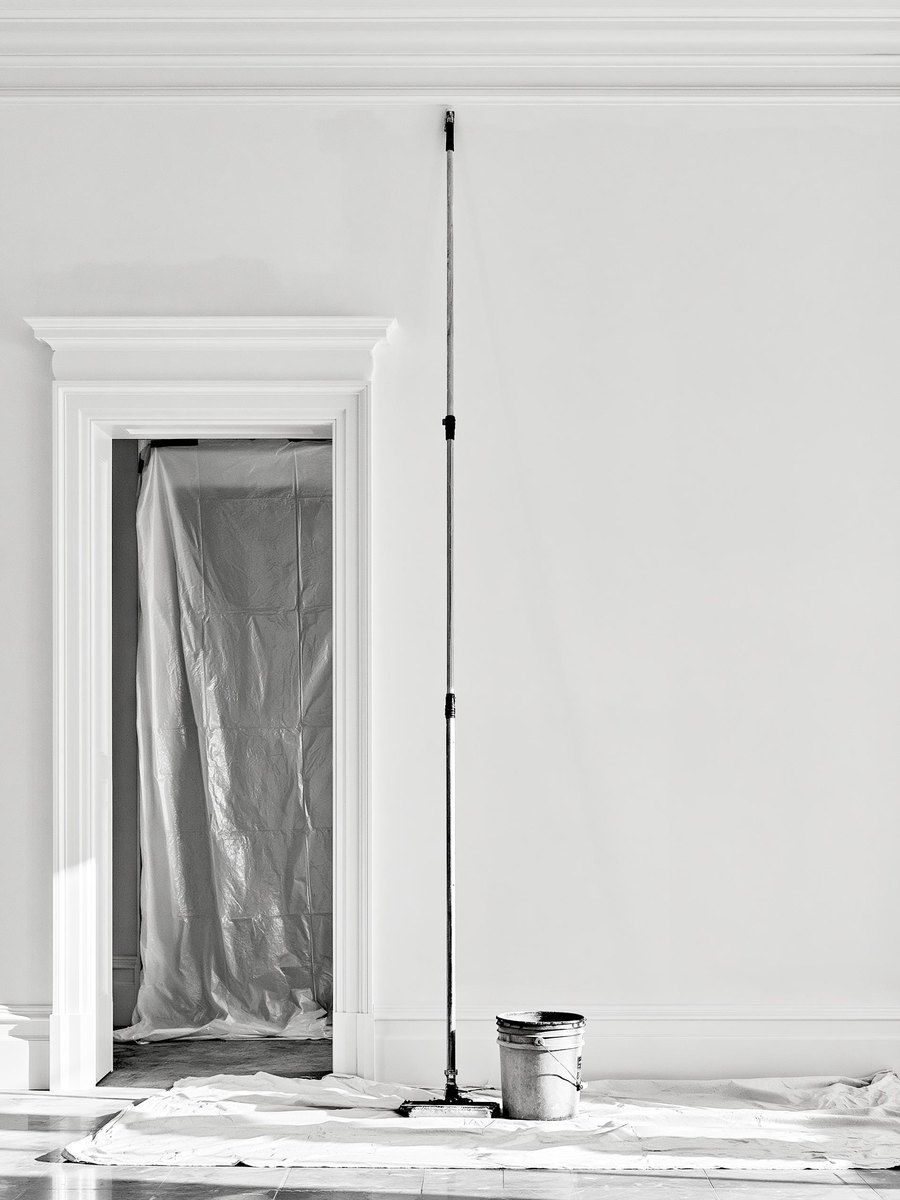
Sanding pole standing at rest against a freshly primed wall in a chalky warm off white, a lidded bucket beside it on a canvas drop cloth, the floor swept and a doorway masked with plastic sheeting behind

Get Your FREE Estimate

Tell us roughly how much wall there is and what's going over it, and we'll talk through which finish level fits. Then we measure and put your price in writing. Your estimate is free.

You choose the drywall finish level, and we quote that price.

Call Us Now! 830-429-4502